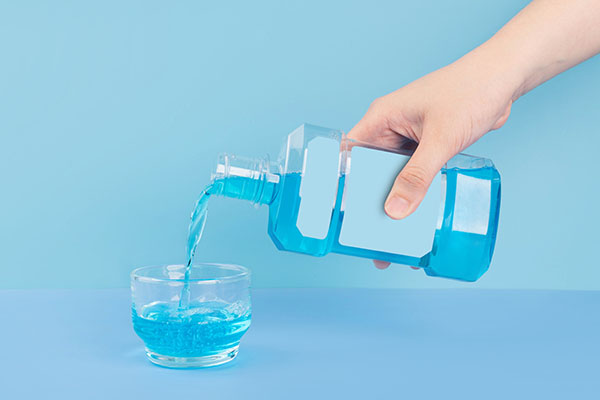
 When adjusting to new dentures, patients are sometimes unsure of how to take care of them. Dentures need to be kept clean just like natural teeth, but it is not always obvious how to do so or what should be used. One question, in particular, stands out: "Is it okay to use mouthwash?"
Why Soak Your Dentures?
A common piece of advice for new denture wearers is to, when they are not needed, take the dentures out and put them in water or a cleaning solution, especially overnight. There are a few reasons for this.
Taking a Break
While dentures are made to fit with your mouth, wearing them constantly can irritate the gums. Removing your dentures gives the tissues in your mouth some reprieve. This is especially true if you are adjusting to new dentures.
Hygiene
Typically, dentures are made of acrylic resin, a type of plastic. While acrylic is hardy enough, it is not as solid as it looks to the naked eye. The material is filled with tiny pores that the bristles on a toothbrush cannot get into. Bacteria can and will, however. Soaking dentures helps flush these bacteria out.
Preventing Damage
The acrylic that comprises dentures can become brittle if left dry for an extended period. This makes them much more susceptible to damage. The material may also warp as it dries out, and even a slight change in shape makes them fit poorly.
Safe Cleaning Products for Dentures
It makes sense that people would choose to put their dentures in mouthwash. Most mouthwashes contain antibacterial agents and an appealing scent to keep your mouth clean and fresh, and it seems that dentures would benefit even more. However, what is safe for natural teeth may not be safe for acrylic dentures.
Many mouthwash products contain alcohol — specifically, ethanol — for killing bacteria. The problem is that alcohol reacts with most plastics, including acrylic resin, partially dissolving them and leaving them cracked and discolored. If you want to use mouthwash, make sure it is alcohol-free and diluted with water. It may be a good idea to do so if you are concerned about bad breath.
Denture manufacturers provide instructions on what products to use when cleaning dentures and how to use them. Broadly, if they contain no metal parts, you will likely want to find a commercial denture cleaner. These come in the form of tablets that are dissolved in water to produce a cleaning solution. Combined with a soft-bristle toothbrush and fluoride toothpaste, this is highly effective in cleaning and sanitizing dentures. Stains can be removed by soaking in diluted hydrogen peroxide, white vinegar, or specialized denture whitener. Do not use bleach or conventional whiteners, as they can damage dentures.
The length of time to soak dentures varies based on the solution used, but generally, 30 minutes is recommended. Use water, or a 10% white vinegar solution, overnight. Whatever you use, it is a good idea to rinse the dentures off before putting them back in.
Conclusion
The right cleaning routine is essential when adjusting to new dentures. While many recommend mouthwash, be careful about what kind you use and do not rely solely on it.
Request an appointment or call Dr. Charles Arp, DDS & Dr. Smriti Bajaj, DMD at 404-682-2887 for an appointment in our Atlanta office.
Related Posts
Adjusting to new dentures may seem intimidating, but it is easy if you take an informed approach. There is little to worry about as long as you begin your journey with the right set of knowledge and a positive attitude.If you have never worn them before, dentures can feel strange. Have no fear. Expect that…
Adjusting to new dentures can involve several changes to a person's routine. One thing that should stay the same, however, is regular dentist appointments. Here is what a new patient needs to know about the importance of dentist appointments and how often he or she needs to visit the dentist after receiving dentures.One commonly asked…
When adjusting to new dentures, a patient will likely have a long list of questions. Can dentures be slept in? How does wearing dentures change a person's oral hygiene routine? Here you will find the answers to these and more information about a nightly care routine for those who are adjusting to new dentures.When adjusting…